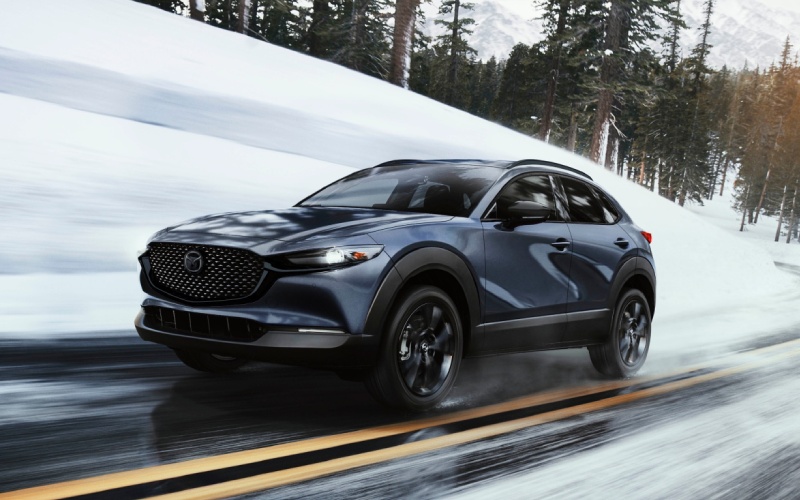
Huntington Beach Mazda - Which compact SUV feels more composed in stop-and-go traffic, the 2026 Mazda CX-30 or 2026 Hyundai Kona around Costa Mesa, CA?
Traffic ebb and flow along coastal routes can make or break your daily drive. When shoppers ask which small SUV feels calmer and more composed in congestion, we look closely at how the vehicle manages throttle response, ride isolation, visibility, and assistance features. The Mazda approach is to minimize cognitive load—put the most important information in your line of sight, reduce the need for menu-diving, and tune the chassis so every input feels natural. The Hyundai strategy emphasizes a broad tech set and crisp displays that keep you informed. Both are commendable, and both deliver meaningful help in real-world commuting.
Start with visibility and glance behavior. The CX-30’s available windshield-projected Active Driving Display places speed, navigation cues, and alerts directly ahead, helping you keep your eyes up when traffic compresses. Pair that with the available 360º View Monitor and you get confident awareness for lane changes and tight merges. The Kona’s available Surround View Monitor and Blind-Spot View Monitor on Limited provide strong situational context too, with lane feeds displayed in the cluster. From a stop-and-go standpoint, Mazda’s available Cruising & Traffic Support assists with speed, following distance, and steering in certain conditions, easing the tedium of daily jams. Kona counters with available Highway Driving Assist and Navigation-based Smart Cruise Control on Limited, which shine on longer stretches and interchanges.
Power delivery also shapes how “restful” a commute feels. The CX-30’s SKYACTIV®-G powertrains focus on linear, predictable response so the SUV eases forward smoothly and holds speed with minimal pedal corrections. With the available SKYACTIV®-G 2.5 Turbo, there is effortless reserve for quick gaps without a downshift frenzy. The Kona’s available 1.6L turbocharged GDI 4-cylinder is lively and pairs well with its 8-speed automatic, feeling snappy from a light. In repeated slow-and-go cycles, Mazda’s calibration tends to reduce head-toss and surging, which many commuters notice within the first few miles.
Ergonomics and interior calm matter, too. Mazda’s cockpit minimizes reflective surfaces, keeps the center display at a natural sight height, and uses an intuitive controller to limit poke-and-swipe distraction. Available Alexa Built-in further reduces friction with natural voice prompts. Kona’s twin-screen layout looks sharp and, on Limited, adds a premium flair. Wireless Apple CarPlay® and Android Auto™ are in both SUVs, as is wireless charging on upper trims, so staying connected is straightforward either way. Where the Mazda often earns praise is in how quietly the cabin filters out small road chatter—subtle, but soothing over an hour behind the wheel.
Below are quick considerations if your commute regularly includes gridlock:
- Eyes-up info flow: Mazda’s available head-up display reduces glance time when traffic compresses.
- Low-effort gap keeping: Both offer adaptive cruise with Stop & Go, easing fatigue in slow streams.
- Lane-change confidence: Available 360º views and blind-spot alerts help in dense multi-lane corridors.
- Power with restraint: CX-30’s linear tuning limits lurching; Kona feels zippy but can be more reactive.
- Cabin serenity: Mazda’s quietness and seat contouring support longer hauls with fewer fidgets.
For most coastal commuters, the balance of visibility, linear response, and subtle ride tuning gives the Mazda a composure edge in stop-and-go traffic, while the Hyundai excels at presenting data clearly and offering helpful aids on its highest trims. If you want to feel fresher when you pull into the office or back home, that calm, coordinated Mazda character pays daily dividends.
Huntington Beach Mazda provides hands-on demos of features like the head-up display, i-Activsense® driver assistance, and the 360º View Monitor so you can evaluate how each system supports your routine. Our team is proudly serving Cypress, Costa Mesa, and Anaheim and can set up back-to-back drives to help you judge noise isolation, low-speed smoothness, and sightlines at your pace.
Frequently Asked Questions:
Do both SUVs offer assistance features for heavy traffic?
Yes. Mazda offers available Cruising & Traffic Support and a windshield-projected Active Driving Display, while Hyundai offers available Highway Driving Assist and Surround View Monitor on Limited. Both include adaptive cruise with Stop & Go on select trims.
Which one feels smoother when inching forward repeatedly?
The CX-30’s throttle and transmission calibration emphasize linearity, which helps reduce surging and head-toss in slow streams. Kona feels responsive and energetic, particularly with its available turbo, but Mazda’s tuning often feels more measured over long commutes.
Can I rely on voice commands to reduce distraction?
Yes. The CX-30 offers available Alexa Built-in for natural voice control of navigation, climate, and media. Kona supports voice commands through its infotainment and smartphone integrations.